Last Fiefdom
- 4.3
- Rating
- 1.00M
- Installs
- Free
- Price
 Analysis by App-foxy
I approached Last Fiefdom as a decision rather than a quick download: is this the kind of strategy game that deserves regular attention, or is it better treated as a short experiment? After spending time with its royal-war setting and multiplayer siege focus, my answer is fairly clear. It is most appealing to players who enjoy planning attacks, protecting territory, and making choices under pressure. It is less suitable for anyone looking for a quiet puzzle game, a purely offline experience, or a battle system that can be understood without much trial and error.
The game is free to start, which makes testing it easy, but its optional purchases range from $0.99 to $99.99 per item. That matters because a free entry point can still lead to a very different experience depending on how comfortable you are with spending. I would install it with a specific expectation: I am here for a competitive strategy loop, not simply a casual fantasy theme.
What matters before choosing Last Fiefdom
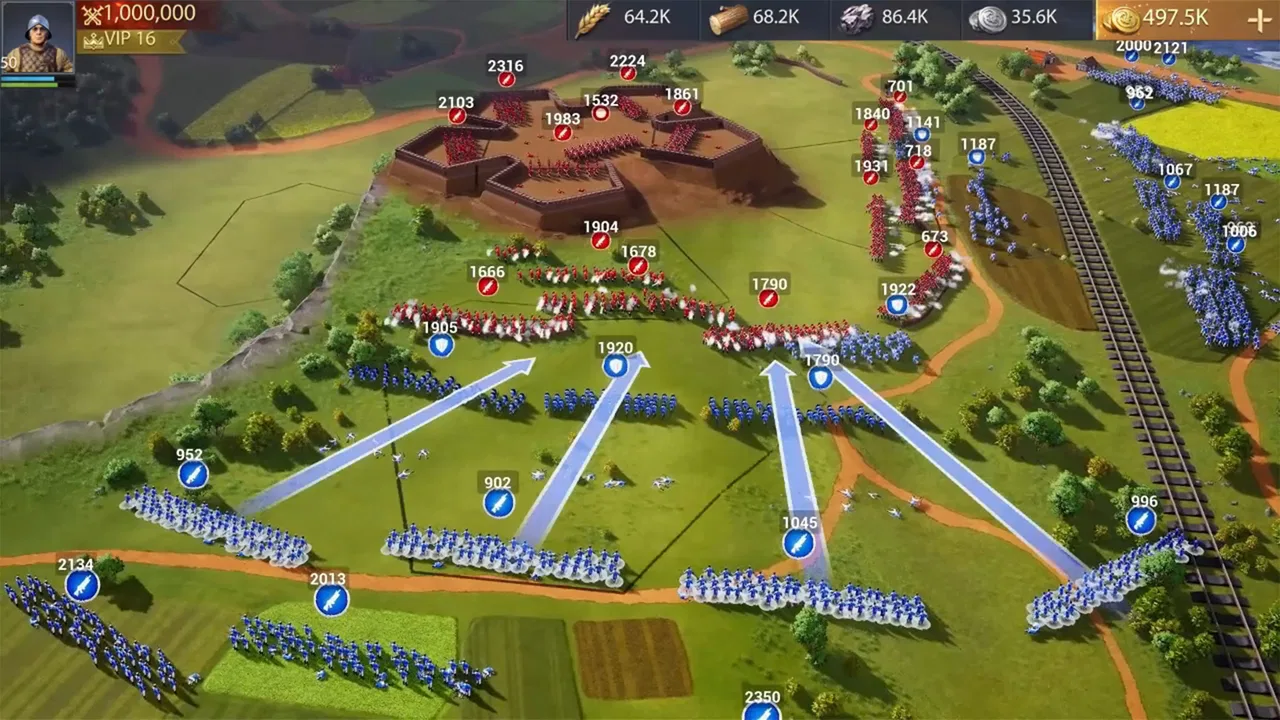
The first decision criterion is whether you enjoy strategy that unfolds through conflict with other players. This is not presented as a single-player kingdom builder where I can calmly arrange buildings and leave the game alone. Its identity is tied to royal warfare and multiplayer siege battles, so the appeal comes from preparing an assault, reading the opposing position, and accepting that a clever plan can still fail.
You May Also Like

 Blood Strike: 2.5 Anniversary
Blood Strike’s Loadouts Turn Every Drop Into a Tactical Gamble
A close look at Blood Strike’s custom loadouts: how fast access to signature weapons reshapes its battle royale rhythm, rewards preparation, and narrows the gap between fights.

 Pandora - Music & Podcasts
Pandora’s Music Is Easy to Start, but Harder to Recover
Pandora’s strength is its low-effort path from a seed to a station. Its weak spot is how much confidence it asks you to place in connection, setup, and quiet recovery.

 8 Ball Pool
 Is Built on Rivalries, Rematches, and Routine
A close look at the rivalries, rematches, shared routines, and unanswered safety questions that turn a quick pool match into a persistent mobile community.

 Samsung Music
’s Quiet Strength Is Playing What You Already Own
Its reach comes less from spectacle than from dependable access to a personal library. That simplicity is both the app’s strongest retention engine and its ceiling.

 AccuWeather: Weather Radar
AccuWeather Review: A Quick, Clear Forecast for Everyday Decisions
For everyday plans, the best forecast is the one you can understand quickly. AccuWeather makes rain timing, radar, and local conditions easy to act on, with a few trade-offs.

 Hill Climb Racing
Why Hill Climb Racing Still Turns Crashes Into One More Run
A tiny car, a bumpy hill and one more upgrade: Hill Climb Racing keeps resurfacing because its simple chaos makes every near-miss feel personal.
More From Our News Desk



That makes the game a better match for people who like making several connected decisions instead of tapping through a linear campaign. I found myself thinking about the order of actions, the value of holding back a resource, and whether an immediate attack was worth the risk. Those small decisions are more important than the medieval presentation by itself. If the strategy layer does not interest you, the setting will not carry the whole experience.
The second criterion is patience. Multiplayer strategy games often ask players to learn through mistakes, and Last Fiefdom is not the sort of title I would recommend judging after one rushed session. The first encounters are useful for discovering how its battles communicate information, but they may also feel demanding if you expect instant mastery. I recommend giving yourself several matches before deciding whether the planning feels rewarding or merely slow.
The third criterion is how much pressure you want around progression. The game is rated Everyone 10+, and that makes it broadly approachable for younger players and families, but the competitive format can still feel intense. An age rating does not tell me whether the pace or rivalry will suit a particular person. Someone who enjoys losing, adjusting, and trying again will probably get more from it than someone who wants every session to produce a clear victory.
It is also worth considering your preferred session style. I would choose this game when I have enough time to focus on a battle rather than when I only want a one-minute distraction. Even if individual actions are simple, a siege decision can have consequences later. Playing while distracted makes it easier to waste an opportunity or commit to a plan without noticing what the opponent is doing.
Last Fiefdom comes from Bravo Games Limited and belongs firmly to the strategy category. It launched on September 15, 2025, and the current version is 23.4.90. On Android, the stated minimum operating-system requirement is version 7.0, so the technical barrier is not especially demanding for compatible devices. The more important question is not whether a phone can run it, but whether its owner enjoys a game that asks for attention and repeated learning.
How I approached the opening sessions
I found it useful to treat early play as reconnaissance instead of trying to win at all costs. In the opening matches, I watched which actions created real pressure and which ones only looked productive. That approach helped me avoid a common mistake in strategy games: spending everything early because the interface makes immediate activity feel valuable.
A practical routine is to pause before each major commitment and ask three questions. What does this move protect? What does it leave exposed? If it fails, can I recover without rebuilding my entire plan? This sounds basic, but it is especially useful in siege-focused play, where an attack can change the balance of a battle rather than simply add points to a score.
Another useful habit is to separate learning losses from bad luck. When a match goes badly, I try to identify the first decision that narrowed my options. That is more valuable than blaming the final exchange. If I spend too much time reacting, I may discover that the real error happened several turns earlier when I ignored the opponent’s likely route.
Where the game earns its place
The strongest part of Last Fiefdom is the way its theme supports its central activity. Royal territory and siege warfare give the decisions a clear purpose. I am not just arranging abstract pieces; I am trying to preserve a position, create an opening, or break through a defended area. That context makes cautious play feel meaningful rather than passive.
I also like that the multiplayer emphasis gives repeated matches a reason to exist. A campaign with fixed opponents can become predictable once I understand its patterns. Human competition is less tidy. Even when the available actions remain familiar, another player can respond in a way that forces me to change my plan. That uncertainty is where the game has its best moments.
The biggest strength is not the fantasy wrapper; it is the need to convert limited opportunities into a workable siege plan. I found the most satisfaction in situations where the obvious attack was not the best attack. Waiting, testing a defense, or preserving an option for later can be more effective than constantly pushing forward.
This is also where the game can appeal to players who have outgrown very simple casual strategy titles. It offers a more deliberate kind of engagement without requiring the subject matter of a historical simulation. I can enjoy the feeling of command without needing to study real military history or manage an enormous spreadsheet of systems.
The game’s public reception supports the idea that it has found an audience. It holds an average rating of 4.4 from around 6,100 ratings, with roughly 424 written reviews, and it has passed 100,000 installs. I would not treat those figures as proof that every player will enjoy it, but they do suggest that the core concept is connecting with a meaningful group of mobile players.
Small decisions that improve the experience
My first practical tip is to avoid spending every useful option simply because it is available. In a siege game, flexibility has value. Keeping one response in reserve can make an opponent hesitate, while an empty hand or exhausted plan can reveal that I have no answer to a counterattack. I would rather finish a round with a credible follow-up than with a dramatic move that leaves my position fragile.
My second tip is to study the shape of a loss rather than only the result. If I repeatedly fail after attacking the same area, the answer may not be “attack harder.” It may be that I am treating a defended position as a direct target when I should first create pressure elsewhere. This kind of review turns a frustrating match into a lesson and gives the multiplayer loop more depth.
My third tip is to use short sessions for experimentation and longer sessions for serious competition. When I have limited time, I can test a risky idea without expecting a perfect result. When I have more time, I can play with a stable plan and notice how opponents respond. Separating those moods prevents casual experimentation from feeling like a wasted competitive attempt.
A fourth insight is that the game rewards emotional control as much as tactical attention. A failed siege can tempt me into an immediate second attack, especially when I want to recover quickly. That reaction is often worse than the original mistake. Taking a moment to reassess the position helps me avoid turning one error into a sequence of desperate decisions.
Where another strategy game may suit you better
Last Fiefdom is not automatically the best choice for every strategy fan. If I want a relaxed city-building experience with little direct confrontation, I would look elsewhere. The game’s royal-war identity makes competition central, so players who prefer decoration, resource planning, or peaceful expansion may find its strongest feature to be the very thing that pushes them away.
It may also be the wrong choice for someone who wants a fully offline game. Multiplayer siege battles are the reason to return, and a player who dislikes interacting with human opponents will not receive the full value of the design. A traditional single-player strategy game would be a better fit for someone who wants to pause freely, replay a fixed scenario, or control every variable.
There is another trade-off compared with fast arcade strategy games. Last Fiefdom asks me to think about consequences, while a more action-focused alternative may provide quicker feedback and less commitment per match. If I only have a few spare minutes and want immediate movement, an arcade title may feel more satisfying. If I want to consider a position and learn from an opponent, this game has the advantage.
Players who prefer deep, long-form strategy simulations may also want something more elaborate. Last Fiefdom’s appeal is its focused siege-and-kingdom fantasy, not necessarily the breadth of a complex desktop-style war simulator. I would choose it for accessible mobile competition, not for the most detailed economic model, historical accuracy, or grand-campaign scope.
The same comparison applies to card-based strategy games. A card battler may offer more visible deck construction and a different kind of probability management, whereas Last Fiefdom puts its emphasis on the feeling of directing a royal conflict. Neither approach is universally superior. The right choice depends on whether I want to build a deck, position a force, or make broader territorial decisions.
Free entry, purchases, and the cost of changing habits
The free price is a genuine advantage because I can evaluate the basic feel before committing money. I would recommend playing long enough to understand whether the multiplayer loop itself is enjoyable. Buying something early will not fix a game that does not match my preferred pace, and it is better to discover that through play than through assumptions about the fantasy setting.
The purchase range deserves attention, especially for families sharing a device or for anyone who tends to spend impulsively during competitive play. I would decide on a personal limit before entering the store rather than making that decision after a disappointing loss. A clear boundary keeps optional spending from becoming part of the emotional cycle of trying to recover.
The cost of switching from another strategy game is not only financial. It is also the time needed to learn a new battle language. If I already understand another title’s economy, controls, or timing, those habits may not transfer neatly. I should expect to make inefficient choices while learning how Last Fiefdom communicates threats and opportunities.
That learning cost is worthwhile when I want a new multiplayer focus, but it is not worthwhile if I am already satisfied with a strategy game that offers the exact pace and level of competition I prefer. I would switch for the distinct siege atmosphere and the chance to face different decision patterns, not because every strategy game needs a replacement.
For a younger player, I would also discuss purchases and competitive frustration in advance. The Everyone 10+ rating makes the game accessible in age terms, but accessibility does not remove the need for sensible spending habits or breaks after tense matches. For an adult, the same advice is useful: free-to-start should mean “easy to test,” not “automatically cost-free forever.”
Who should install it
I recommend Last Fiefdom to players who enjoy multiplayer strategy, medieval or royal themes, and battles where preparation matters as much as the final attack. It is particularly suited to someone who likes reviewing mistakes, adapting to another person’s choices, and building confidence over several sessions rather than demanding instant success.
I would also suggest it to a player who wants something more thoughtful than a reflex game but less intimidating than a highly detailed war simulation. Its focused premise gives the matches a recognizable purpose, and the free entry point makes the decision low-risk. The best experience will come from treating each battle as a small strategic problem rather than as a race to tap through actions.
I would skip it if my priority is a calm offline pastime, a purely decorative kingdom builder, or a game with no pressure from competitive outcomes. I would also hesitate if I dislike learning through losses or if I want every session to feel equally productive. The multiplayer structure naturally creates uneven results, and that is part of the appeal for some players and a source of irritation for others.
After weighing those trade-offs, I see Last Fiefdom as a worthwhile free strategy game with a clear audience. Bravo Games Limited has centered it on royal conflict and multiplayer sieges, and that focus gives it more personality than a generic kingdom theme. My recommendation is to try it without spending first, use the opening matches to learn rather than chase wins, and decide afterward whether its particular style of pressure fits you.
For me, the deciding point is simple: choose Last Fiefdom when you want to think through a siege against another player, not when you merely want a fantasy game to fill a spare minute. If that sounds like the kind of challenge you enjoy, the free download makes experimentation sensible. If you prefer complete control, quiet progression, or instant action, another strategy category will probably serve you better.
With an average of 4.4 and more than 100,000 installs, it has enough early traction to be worth examining, while its current version, 23.4.90, provides a clear starting point for new players. I would keep my expectations grounded, watch my optional spending, and give the battle system time to reveal its strengths. Under those conditions, this is a game I would recommend to a friend who genuinely enjoys competitive planning.
FAQs for Last Fiefdom
01What platforms is Last Fiefdom available on?
Last Fiefdom is available for both Android and iOS devices. You can download it from the Google Play Store for Android or the Apple App Store for iOS. Ensure your device meets the minimum system requirements for optimal performance of the game.
02Is Last Fiefdom free to play?
Yes, Last Fiefdom is free to download and play. However, it offers in-app purchases that can enhance your gaming experience. These may include items, upgrades, or special features that can provide advantages or customization options within the game.
03What are the main features of Last Fiefdom?
Last Fiefdom offers a strategic gameplay experience where players manage and defend their own medieval kingdom. Key features include resource management, building and upgrading structures, training troops, and engaging in battles with other players or AI-controlled enemies. It also includes multiplayer options and events.
04How can I ensure my progress is saved in Last Fiefdom?
To save your progress in Last Fiefdom, it’s recommended to link the game to your Google Play or Apple Game Center account. This ensures your game data is stored in the cloud, allowing you to recover your progress if you switch devices or reinstall the game.
05Are there any age restrictions for playing Last Fiefdom?
Last Fiefdom is generally suitable for players aged 12 and up due to its strategic gameplay and combat elements. Parents should be aware of the in-app purchase options and the online multiplayer features, which may involve interactions with other players.
Pros
- Intuitive interface makes navigation easy.
- Rich storyline keeps players engaged.
- Diverse character classes to explore.
- Regular updates with new content.
- Multiplayer mode offers social interaction.
Cons
- Requires stable internet connection.
- In-game purchases can be pricey.
- Some features locked behind paywalls.
- Occasional server downtime issues.
- Battery consumption is quite high.

Last Fiefdom
Gallery